
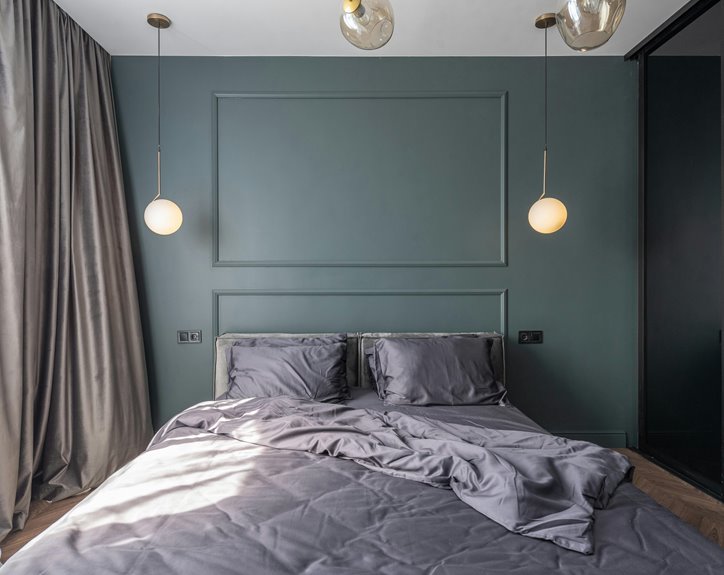
I’ve redesigned my bedroom into a calm retreat by starting with off-white walls, layering soft textures like velvet and linen, and adding a headboard that anchors the whole room.
Strategic mirrors opposite windows bounce natural light throughout, while potted plants in corners create visual interest and freshen the air.
Dimmable warm lights, styled nightstands, and updated curtains complete the look at a reasonable cost.
These ten approaches work together to create your personal sanctuary—and there’s so much more to discover about making each element work well.
Start With a Calming Color Palette
How’d you like to walk into your bedroom and instantly feel your shoulders drop?
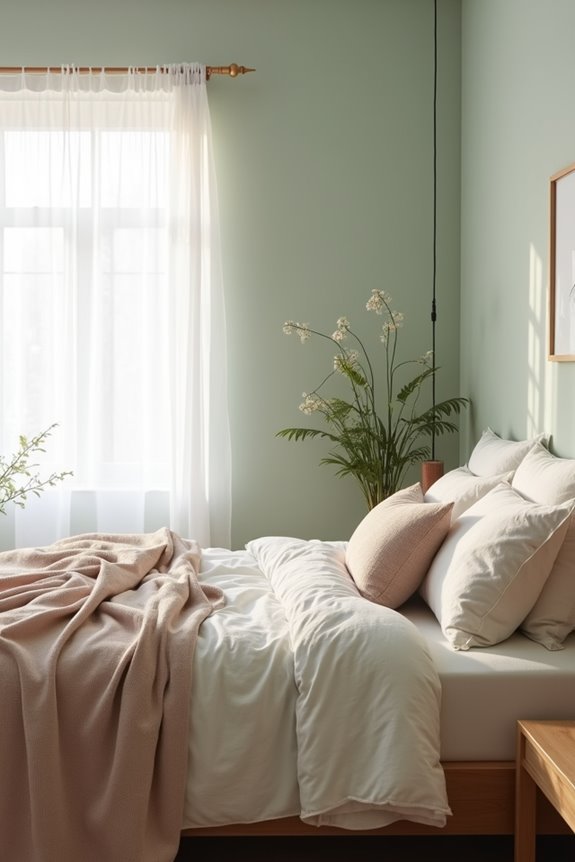
That’s what a thoughtful calming color palette can do. I’d recommend starting with off-white walls as your foundation—they’re fresh, neutral, and won’t compete with your other bedroom decor ideas. Layer in soft green accents through bedding, pendant lights, or a single accent wall. These colors work together beautifully, creating that serene sanctuary we all crave.
The key is balance. Pair your color choices with natural textures like wood furniture, layered cushions, and soft fabrics. Add a few potted plants to reinforce those green accents. This combination creates a restful retreat without feeling sterile or cold. You’re not just decorating; you’re building an environment designed specifically for sleep and restoration—a place where you genuinely belong.
Layer Textures and Soft Furnishings
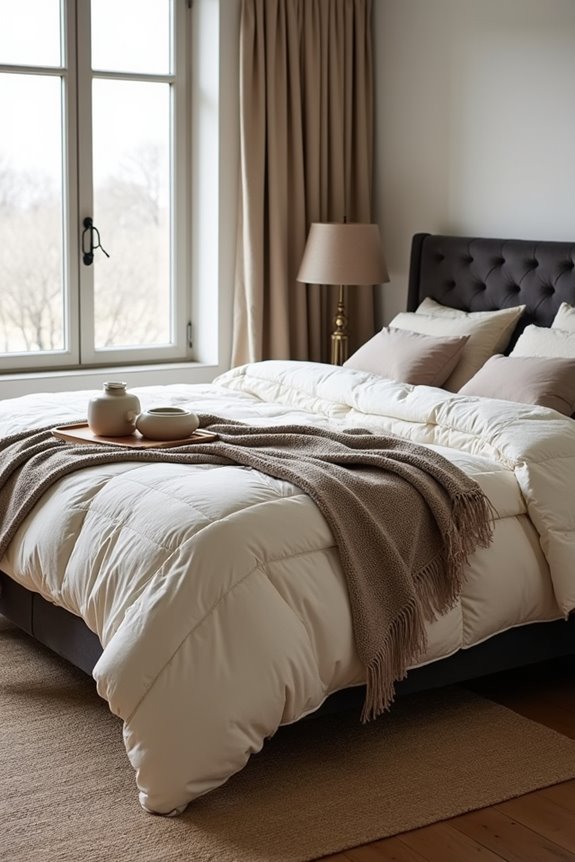
I’ve discovered that mixing different fabrics—velvet, linen, wool—changes a bedroom from flat and boring into a space that actually feels good to touch. When you layer textures through bedding, cushions, and throws, you’re creating visual depth that makes the room more interesting without cramming it full of stuff. The trick is sticking to a cohesive color palette, like soft neutrals with earthy greens, so all those varied textures work together rather than feeling chaotic.
Mixing Textures For Depth
Texture is an ingredient that shapes a bedroom from flat and boring into a space that feels inviting. Layering different textiles creates warmth and visual interest without overwhelming your room.
The key is combining contrasting materials strategically. Start with a calm base—neutral walls and simple bedding—then add depth through tactile elements. Layer a woven rug beneath your bed, drape a velvet throw across it, and pile cushions in varying fabrics for a multi-sensory look.
| Textile | Best For | Texture Feel |
|---|---|---|
| Velvet | Bedspreads | Soft, luxe |
| Linen | Sheers | Light, airy |
| Wool | Throws | Warm, cozy |
| Rattan | Accents | Natural, organic |
| Cotton | Base layers | Soft, gentle |
Introduce patterns sparingly—a knitted throw with geometric designs works well against smooth surfaces. This balanced approach creates depth while keeping your bedroom feeling calm and welcoming.
Soft Furnishings As Anchors
Why do some bedrooms feel so inviting while others leave you cold? Soft furnishings—throws, cushions, and blankets—are anchors that build a welcoming space.
When I layer textures strategically, I create depth that draws people in. I drape a chunky knit throw across my bed’s foot, positioning it as a visual focal point. Alongside this, I arrange cushions in varying sizes using my color palette of honey tones and creams, keeping everything cohesive rather than chaotic.
These soft furnishings anchor warmth throughout my room. A plush blanket on my reading chair signals comfort. I rotate my throws and cushions seasonally, refreshing the mood without major expense. This approach builds the welcoming retreat I want.
Design a Statement Headboard or Focal Point
I’ve found that your headboard can anchor an entire bedroom by setting the room’s style and color scheme. Whether you choose an upholstered design in rich fabric, experiment with bold colors and patterns painted directly on the wall, or layer in strategic lighting and wall art around it, your headboard becomes the visual centerpiece that everything else responds to. The key is picking an approach that fits your budget and personality while leaving room for your bed to feel balanced within the space.
Upholstered Headboard Options
How can you improve your bedroom’s focal point at a reasonable cost while keeping your furniture arrangement intact? An upholstered headboard offers a practical solution. Unlike painted designs fixed to walls, a wall-mounted headboard provides flexibility for future layout changes while creating a visual anchor.
Fabric headboards come in countless styles. You can choose bold patterns or subtle hues that reflect your taste. For small space bedrooms, an upholstered headboard enhances height perception, making your bed feel architecturally integrated.
Consider budget-friendly decor options like DIY headboards using affordable fabric and basic padding. Wall-mounted versions simplify visual lines, drawing eyes toward artwork or murals beyond the bed. Whether you prefer luxe velvet or cozy linen, upholstered headboard options let you create a room that’s truly yours.
Bold Color and Pattern
While an upholstered headboard brings softness and texture to your space, a bold painted focal point creates visual impact—it’s the design choice that draws attention the moment you enter. Painting directly on your wall in defined shapes provides immediate bedroom design results at reasonable cost.
| Bold Color Option | Best Placement | Complementary Accent |
|---|---|---|
| Paean Black | Full headboard wall | Mustard throw pillows |
| Preference Red | Arch shape above bed | Gold-framed wall art |
| Inky Blue | Half-wall design | Velvet bedding |
Deep, saturated tones make strong visual statements. Pair your bold headboard with complementary textures—velvet coverings and patterned throws increase the overall effect. In smaller bedrooms, restrict your palette to two-tone combinations like blue and yellow to maintain clarity. Add nearby gallery walls or gilt mirrors that reinforce your focal point, creating a coordinated bedroom design scheme.
Lighting and Wall Art
Your painted headboard’s true potential emerges when you layer it with strategic lighting and complementary wall art. Spotlighting your focal point affects the entire room’s atmosphere.
Consider installing wall sconces on either side of your headboard—they’ll highlight your design while creating cozy ambiance. Position art pieces above or beside your painted surface to extend visual interest beyond the headboard itself.
Your wall surfaces deserve thoughtful maintenance planning. Touch-ups become necessary when you shift decor themes, so I recommend using quality paint that matches perfectly.
This combination of lighting and wall art maximizes decor flexibility without requiring furniture rearrangement. You’re creating layers that make your bedroom feel intentionally designed while maintaining practical everyday functionality.
Light the Room Strategically
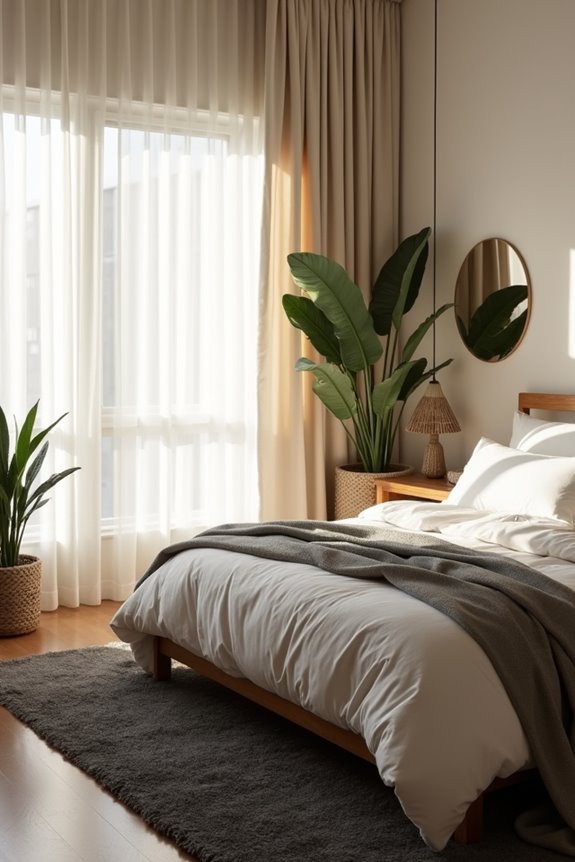
Ever noticed how a bedroom can feel either cozy or cramped depending on where the light comes from? I’ve learned that layered lighting works well in any space. I combine overhead fixtures, wall sconces, and task lamps to create depth and flexibility. This approach lets me adjust lighting for reading, relaxing, or getting ready—all without feeling stuck with one harsh overhead light.
I’ve positioned mirrors opposite my windows to bounce natural light around, instantly making the room feel larger. Sheer curtains let me control glare while maintaining that airy feeling. I also use dimmable bulbs throughout, choosing warm white tones that keep everything cohesive and calming. Strategic lighting isn’t complicated; it’s about working with what naturally belongs in your space.
Use Mirrors to Amplify Light and Space
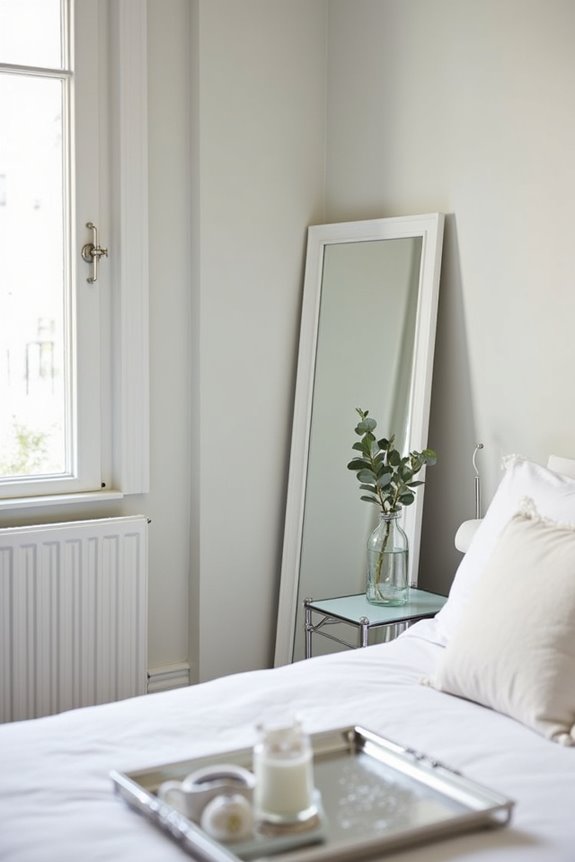
I’ve found that mirrors are a bedroom’s hidden asset for making spaces feel bigger and brighter than they actually are. By reflecting natural light from windows and bouncing artificial light from fixtures around the room, you’ll instantly brighten dark corners and create an airy atmosphere that makes your bedroom feel more open. Strategic mirror placement changes how light moves through your space, giving you that spacious, luminous feeling you’re after.
Reflect Natural Light Sources
How can a simple mirror brighten a dim bedroom?
Mirrors are effective tools for maximizing natural light and creating an inviting space. Strategic mirror placement shifts how daylight moves throughout your room.
Here’s what works best:
- Position mirrors directly opposite windows to bounce incoming sunlight across your room, doubling perceived brightness
- Angle mirrors toward key areas like your bed or seating nook to distribute illumination where you need it most
- Layer mirrors with different sizes to create dynamic light reflection patterns
Slim frames won’t overwhelm walls. This approach brightens even north-facing bedrooms. Natural light sources become your room’s foundation, making everything feel fresher and more welcoming.
Expand Perceived Room Dimensions
Want your bedroom to feel bigger than it actually is? I’ve discovered that mirrors strategically placed throughout my space work well for how the room feels. By positioning mirrors opposite windows, I’ve nearly doubled my bedroom’s perceived brightness and openness. Slim, unobtrusive frames don’t overwhelm walls—they simply invite light to dance around the room.
I’ve found that installing mirrors at varying heights creates depth and dimension. Pairing them with light colors and minimal clutter amplifies the effect notably. When I placed mirrors near my light fixtures, the artificial glow became layered and radiant, making everything feel airier.
| Mirror Placement | Effect |
|---|---|
| Opposite windows | Doubles natural light |
| Near light fixtures | Amplifies brightness |
| Multiple heights | Creates visual depth |
| Slim frames | Expands without overwhelming |
Add Greenery for Life and Air Quality
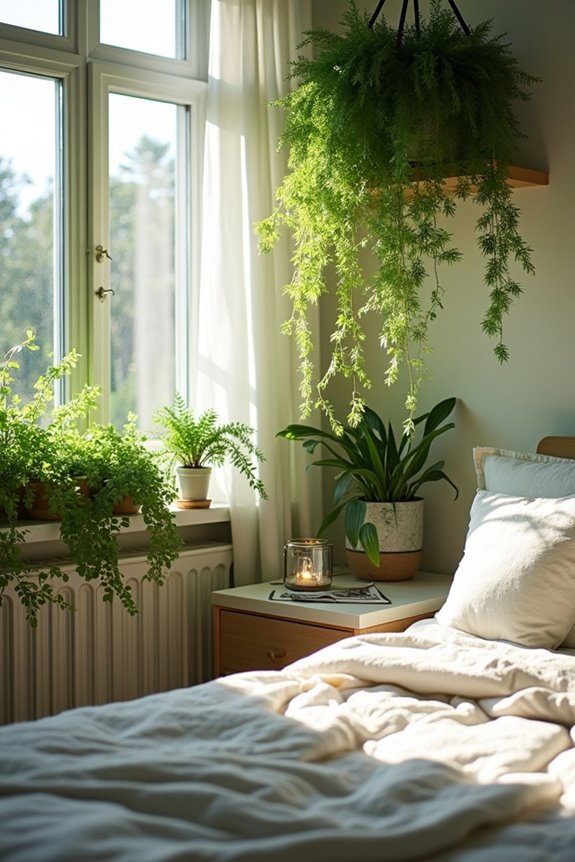
There’s something meaningful about bringing plants into your bedroom—they’re not just decorative pieces, but living contributors to your space’s health and atmosphere.
Indoor greenery actively filters toxins and releases oxygen, improving your air quality while you sleep. I’ve discovered that low-maintenance plants like rubber plants and peace lilies thrive without constant attention, making them perfect for busy schedules.
Indoor greenery actively filters toxins and releases oxygen, creating healthier air while you sleep effortlessly.
Consider these strategic placements:
- Corner spaces that need visual interest and natural balance
- Window sills where natural light supports healthy growth
- Nightstands for calming greenery within arm’s reach
Interacting with these plant varieties reduces stress and creates a room calm that turns your bedroom into a peaceful sanctuary. Start small with one or two varieties, then gradually expand your indoor greenery throughout your home for a cohesive design that reflects what matters to you.
Style Nightstands for Function and Style
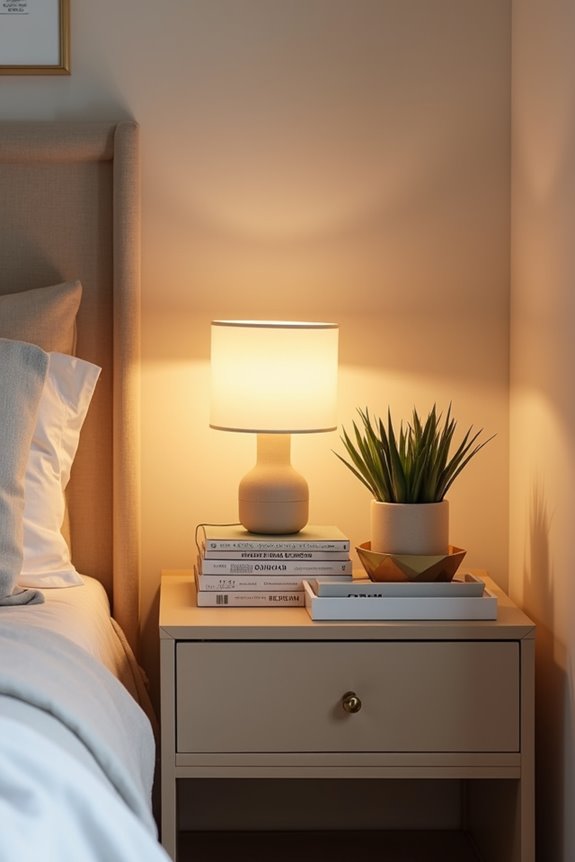
Your nightstand does double duty—it’s both a practical landing spot for your essentials and a design element that anchors your bedroom’s aesthetic. Choosing the right nightstand affects how a bedroom functions and feels.
Consider a compact stool or small bench instead of traditional options. These space-saving choices work well in tight bedrooms while holding lamps, books, and remotes. Lightweight materials with rounded corners enhance airflow and move easily when needed.
For maximum functionality, pair your nightstand with wall-mounted storage or built-in shelving. This keeps surfaces clear and maintains an open, calm feeling.
Match your nightstand’s palette to your room’s color scheme. Light metals and soft neutrals create visual connection. Pairing these choices brings your bedroom together.
Create Visual Interest in Corners
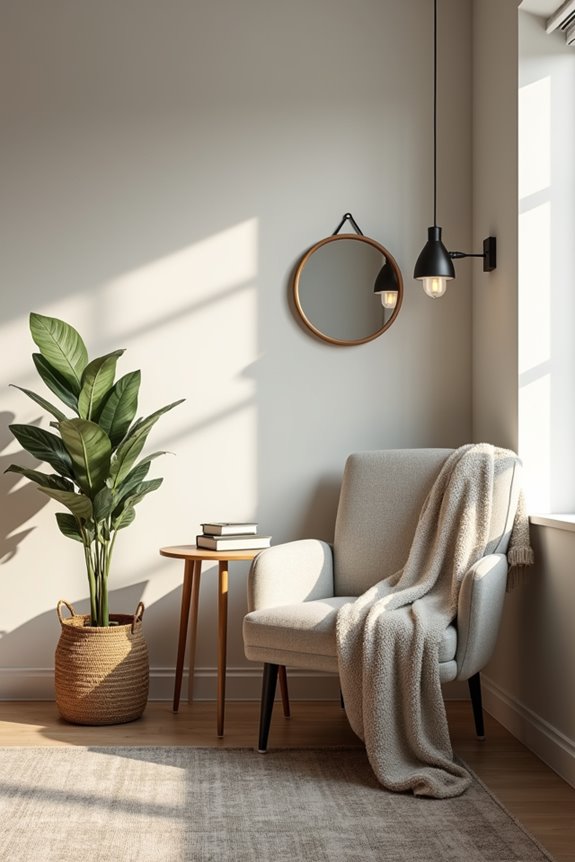
Once you’ve perfected your nightstand’s function and style, it’s time to look beyond the obvious focal points in your bedroom—specifically at those corners that often get overlooked.
Bedroom corners deserve thoughtful corner decor that uses dead space productively. Strategic styling creates visual interest while making your room feel organized and complete.
Consider these approaches:
- Layer textures with a rattan chest, plants, and a table lamp to fill the space
- Add height using a tall mirror or artwork to reflect light and expand perceived room size
- Establish a reading nook with a slim chair, soft throw, and floor lamp for a comfortable retreat
Update the Room on a Budget (Curtains, Pillows, Throws)
How much impact can new window treatments really have? I’ve discovered that swapping out curtains refreshes a bedroom at a reasonable cost. Sheer curtains create an airy, open feeling while maintaining privacy, whereas thermal blackout options improve light control and insulation—both affordable choices.
I layer treatments using natural woven shades beneath patterned panels for texture and dimension. A neutral palette anchors the room, allowing throw pillows and coordinating throws to add personality without overwhelming the space.
For budget decor, I select pieces complementing my existing color scheme. Layered treatments and coordinated accessories improve aesthetics while enhancing functionality. This approach refreshes my bedroom affordably, creating a unified look that feels like home.
Define Zones in Multi-Use Bedrooms
Making a bedroom do double or triple duty doesn’t mean sacrificing style or comfort. I’ve learned that creating distinct bedroom zones allows a cramped space to become a functional area where sleeping, working, and storing all coexist peacefully.
- Use a decorative screen or color-blocked paint to visually separate areas without building walls
- Install layered lighting at different heights—bedside lamps, task lights, and overhead fixtures—to define each zone
- Choose dual-purpose furniture like beds with built-in drawers or storage ottomans to maximize space
I maintain a cohesive palette across zones using matching textiles and wood tones, which keeps the room feeling calm and unified. A small foldaway desk tucked into a corner preserves circulation space while providing a workspace. Room division through thoughtful decor doesn’t require expensive renovations—just deliberate choices that make your multi-use bedroom function more effectively for you.