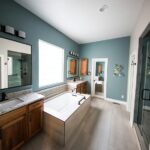
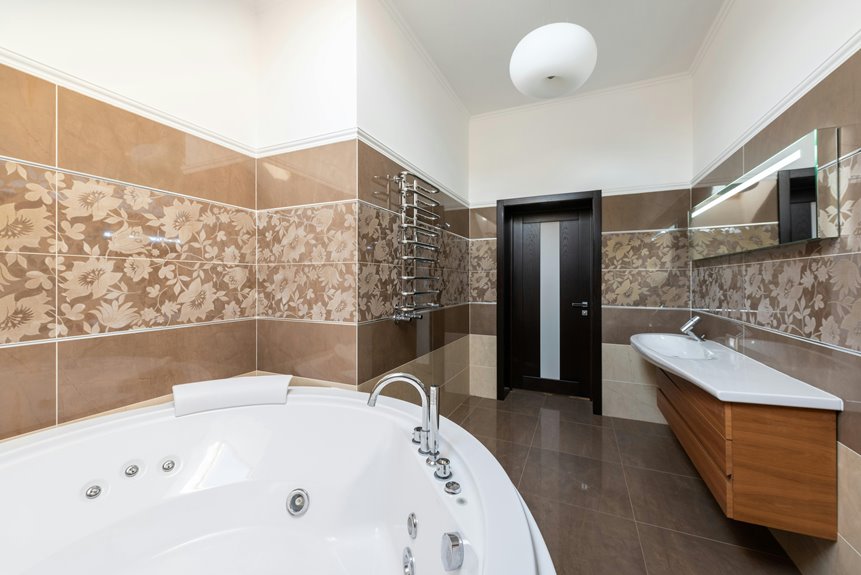
Bathroom decoration costs span $2,000–$5,000 for budget refreshes, $10,000–$25,000 for mid-range upgrades, and $30,000+ for luxury renovations. Your actual price depends on finish level, fixture choices, and bathroom size.
Vanities alone run $440–$3,800, while tiling costs $26–$82 per square foot.
Small updates like new lighting ($200–$500) or hardware swaps provide noticeable results at lower costs.
Understanding what drives these expenses helps you allocate your budget wisely and avoid surprises.
What Drives Bathroom Decoration Costs
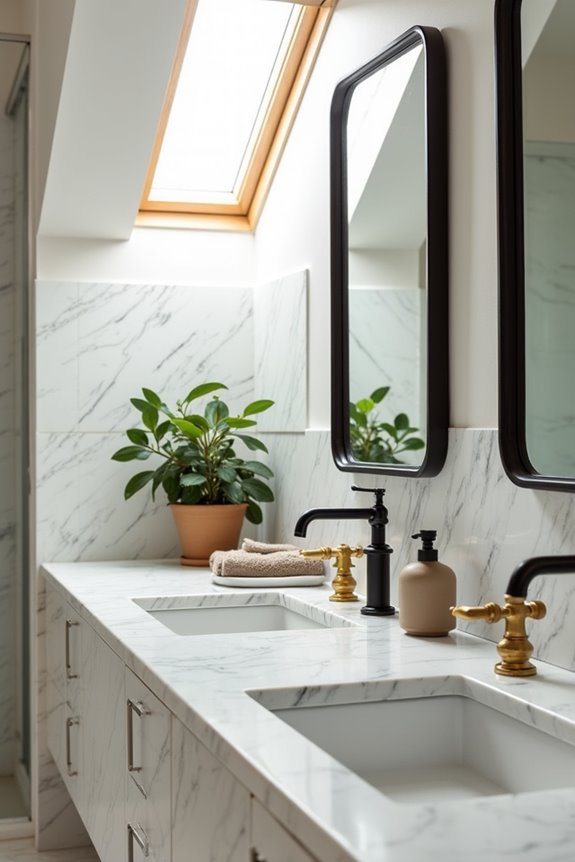
Why does one bathroom makeover cost $3,000 while another runs $30,000? The answer lies in three major factors that shape your bathroom decoration costs.
First, your finish level matters tremendously. Budget-friendly options differ drastically from high-end selections. Second, tile type creates significant price variations. Ceramic costs roughly $1.50 per square foot, while marble runs around $50 per square foot plus installation—that’s a substantial difference.
Third, bathroom size directly impacts expenses. Larger spaces require more materials and fixtures, increasing your overall budget.
Your renovation approach also influences spending. Basic cosmetic updates cost far less than complete gut renovations featuring premium vanities and fixtures. Additional features like heated flooring, frameless showers, and backlit mirrors further increase costs.
Understanding these drivers helps you make informed decisions aligned with your budget and vision.
Budget Bathroom Decoration: $2,000–$5,000 Projects
Now that you understand what drives costs up or down, let’s look at what you can actually accomplish with a realistic budget.
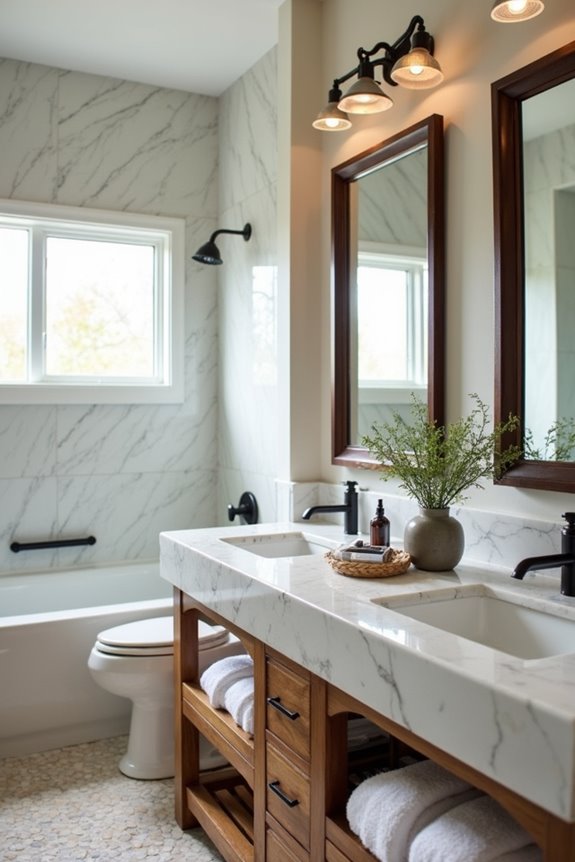
With $2,000–$5,000, you’re joining countless homeowners who’ve improved their bathrooms affordably. This budget range lets you tackle meaningful bathroom decor upgrades while keeping remodel costs manageable.
What you can accomplish:
- Upgrade fixtures, lighting, and mirrors for immediate impact
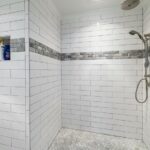
- Install budget-friendly ceramic or porcelain tile
- Replace your vanity with a modest, stylish option
- Paint walls and refresh hardware throughout
- Add new decor accessories that suit your preferences
You’re avoiding major structural changes here, focusing instead on cosmetic updates that refresh your space. Budget-friendly material choices keep expenses reasonable while delivering real results. Labor stays focused on installation and finishing touches, maximizing your money’s impact where it matters most.
Mid-Range Bathroom Decoration: $10,000–$25,000 Upgrades
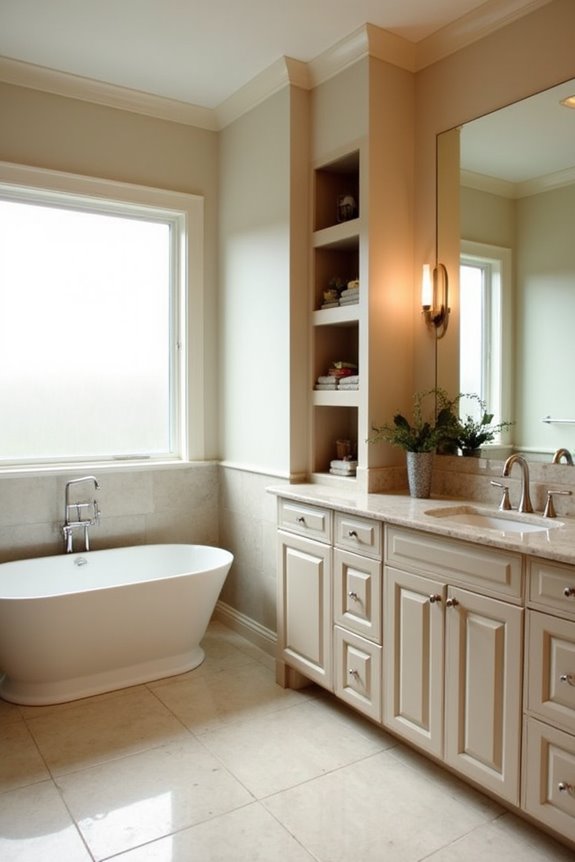
When you’re ready to invest more seriously in your bathroom renovation, you’ll want to understand how material choices, fixture upgrades, and labor timelines work together to shape your final costs. I’ll walk you through selecting quality materials like porcelain and travertine tiles, upgrading to semi-custom vanities, and figuring out realistic timelines so you’re not blindsided by unexpected expenses or delays. Understanding these three elements helps you make smart decisions that stretch your budget further while actually getting the bathroom you’ve been imagining.
Mid-Range Material Selections
How’d you like to renovate your bathroom on a reasonable budget?
Mid-range material selections let you invest in quality without overspending. You’ll find yourself choosing porcelain tile for walls and floors—it’s durable and looks premium. Your vanity becomes a central element; semi-custom options offer personality at reasonable prices.
Consider these smart selections:
- Porcelain tile for flooring and walls ($3–$8 per square foot)
- Semi-custom vanities with quality hardware ($1,500–$3,000)
- Mid-tier fixtures from trusted brands like Kohler or Moen
- Coordinated tile backsplash accents for visual interest
- LED lighting that balances ambiance with functionality
These choices create cohesion throughout your space. You’re investing in materials that’ll last years, not months. Upgrading fixtures and tile simultaneously delivers real impact. You’ll achieve that spa-like feeling you’ve been craving while maintaining quality and staying within budget.
Fixture And Vanity Upgrades
Where bathroom dreams meet realistic budgets—that’s the sweet spot of the $10,000–$25,000 range. I’ve found that fixture and vanity upgrades deliver the most noticeable improvement without excessive cost.
You’re investing in quality pieces that’ll actually last. Premium faucets in brushed nickel or brass finishes improve your space immediately. Stone or porcelain sinks paired with refined vanities create that polished look you’re after. Upgraded toilets with efficient features round out the package.
Here’s what shapes your remodeling costs: material choices matter substantially. Moving plumbing or adding integrated storage pushes expenses higher. Installation complexity varies by project, so I’d recommend getting multiple quotes. Labor and permits depend on your location, but they’re factored into this range. You’ll achieve a bathroom that feels genuinely upgraded.
Timeline And Labor Considerations
So you’ve committed to that $10,000–$25,000 bathroom upgrade—what’s actually involved in pulling it off?
Your bathroom remodel timeline typically spans several weeks, depending on scope and complexity. Here’s what impacts your labor and scheduling:
- Product lead times can stretch 4–8 weeks for specialty vanities or tiles
- Permit requirements add 1–2 weeks if plumbing or electrical work’s involved
- Contractor availability affects start dates, so book early
- Material selection takes time; don’t rush these decisions
- Installation phases happen sequentially—demolition, plumbing, tiling, finishing
Plan for potential delays. Projects often extend when unexpected issues surface behind walls. Work with your contractor to establish realistic deadlines. They’ll coordinate subcontractors and manage labor efficiently. Clear communication prevents frustration and keeps your bathroom renovation on track without surprising budget overruns.
Luxury Bathroom Decoration: $30,000+ Transformations
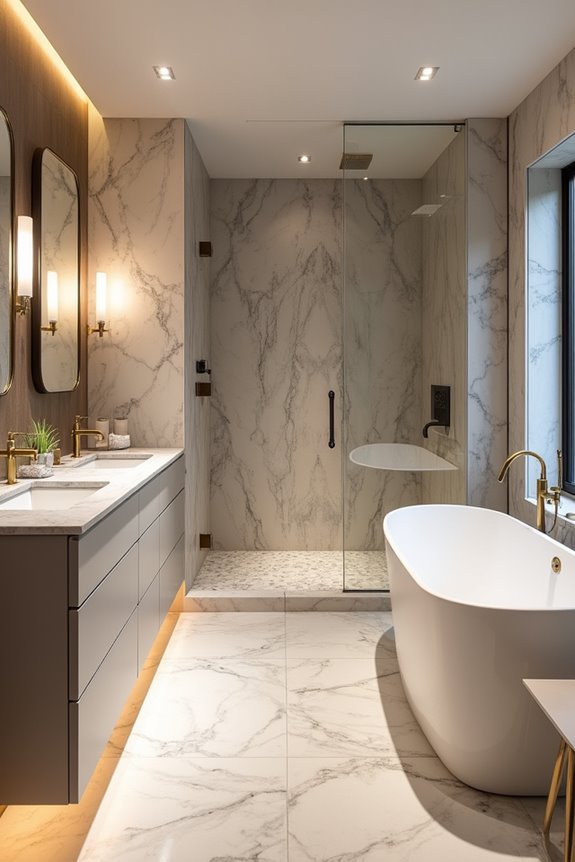
When you’re ready to create a bathroom that functions as a personal spa retreat, you’re entering luxury territory—and that’s where budgets typically start at $30,000 or higher.
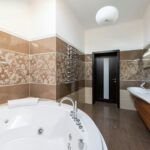
Luxury bathrooms combine premium materials like natural stone tiles and frameless glass showers with spa-like features that enhance your daily routine. Consider heated flooring, backlit mirrors, freestanding soaking tubs, and heated towel racks—these aren’t just nice extras; they’re central to achieving that resort feeling at home.
Custom layouts and designer vanities drive costs up considerably. You’re also investing in quality labor and extensive design work. The finishing touches—plush towels, soft robes, and strategic lighting accents—complete your sanctuary, making every element purposeful and luxurious.
Why Bathroom Size Reshapes Your Decoration Budget
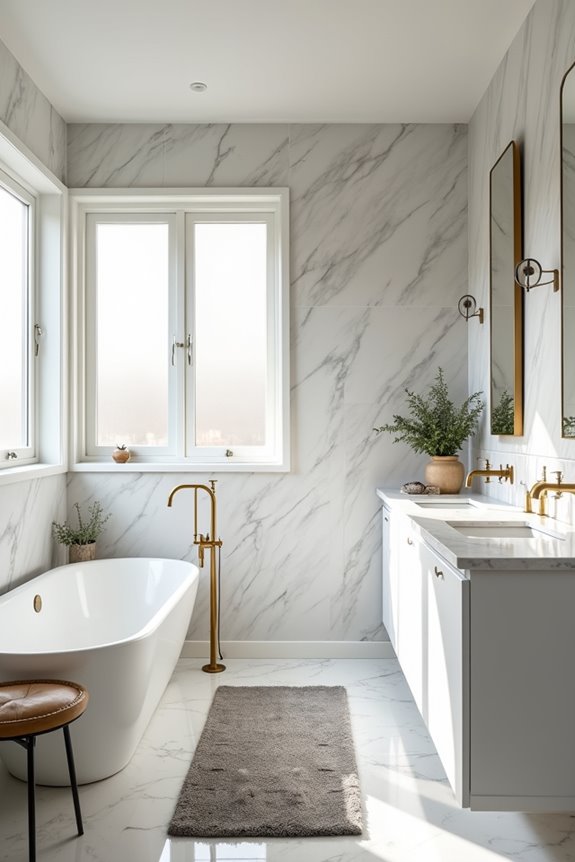
Your bathroom’s square footage directly determines how much you’ll spend on materials, since a 40-square-foot powder room requires far fewer tiles and paint than a 100-square-foot master bath. Larger spaces demand more fixtures—extra vanities, additional lighting, and expanded storage—which compounds costs quickly when you’re choosing quality pieces. The relationship’s straightforward: more wall and floor area means proportionally higher material needs, so understanding your bathroom’s dimensions helps you forecast realistic decoration expenses before shopping for finishes.
Square Footage Cost Correlation
Have you ever noticed how decorating a tiny powder room feels like a completely different project than overhauling a spa-like master bath? That’s because square footage directly impacts your budget. I’ve learned that each additional square foot requires more materials, labor, and fixtures.
Here’s what actually drives those costs up:
- Materials coverage — Larger bathrooms need more tiles, paint, and finishes
- Labor expenses — Installation takes longer in spacious layouts
- Fixture quantity — You’ll install more lighting and cabinetry
- Premium upgrades — Natural stone costs multiply across bigger areas
- Complex layouts — Extra plumbing and electrical work adds up
A 50-square-foot bathroom differs dramatically from a 150-square-foot one. I’ve found that understanding this correlation helps you allocate your budget strategically, so you’re investing wisely regardless of your space’s dimensions.
Fixture Count And Layout
Why does a powder room feel so different to decorate than a master bath? The answer lies in fixture count and layout—two factors that reshape your bathroom decor costs dramatically.
Fixture quantity directly impacts your decoration budget. A powder room with one sink costs far less to decorate than a primary bath with multiple fixtures requiring vanity space and storage solutions.
| Bathroom Type | Fixture Count |
|---|---|
| Powder Room | 1-2 |
| Full Bathroom | 3-4 |
| Primary Bath | 4-5 |
| Master Suite | 5+ |
When you add fixtures, you’re adding tiling, vanity replacements ($440–$3,800), and walk-in showers ($2,000–$15,000). Layout changes requiring permits multiply expenses further, affecting your overall bathroom decor costs significantly.
Material Needs Scale Proportionally
Beyond fixture count, the sheer square footage of your bathroom determines how much material you’ll actually need—and that’s where costs climb faster than you might expect. I learned this the hard way when expanding from a 40-square-foot half bath to a 75-square-foot master bath.
Here’s what changes when your space grows:
- Tile coverage nearly doubles, requiring substantially more material and installation time
- Premium finishes cost more because you’re covering expanded wall and floor areas
- Labor scales directly with square footage, stretching your timeline and budget
- Waste increases due to complex layouts in larger spaces
- Procurement takes longer with more extensive material selections needed
Your materials investment grows proportionally with space. A compact bathroom uses far less tile, countertop material, and cabinetry than a sprawling master bath. Plan accordingly.
How Finish Level Multiplies Your Costs
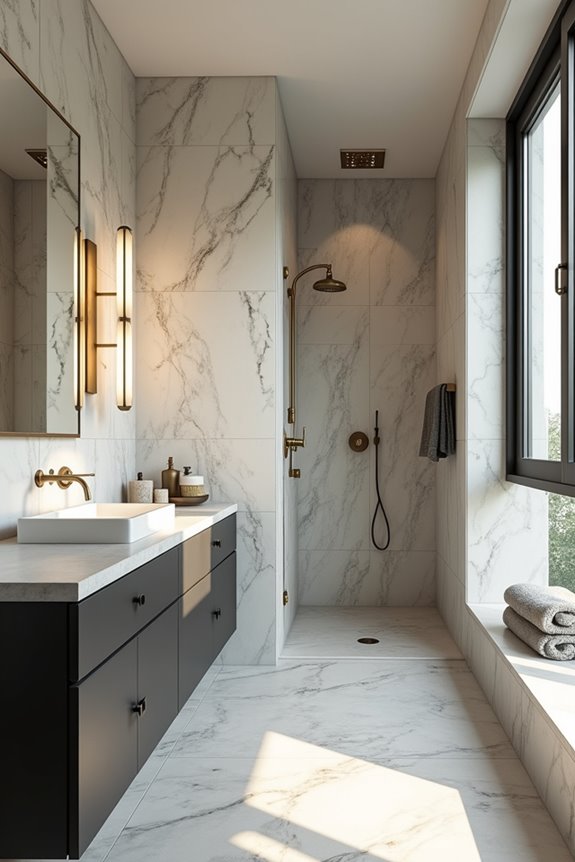
Think of finish level as the volume dial on your bathroom budget—turn it up, and costs climb faster than you’d expect. When you choose budget finishes, you’re picking stock vanities and affordable tiles under $5 per square foot. Mid-grade options introduce higher-quality materials, while premium finishes demand designer brands like Clé or Ann Sacks tiles that significantly increase your material costs.
Here’s what matters: finish level doesn’t just affect tile prices. It influences labor costs too. Premium finishes require specialized trades and more installation time, multiplying your total expense.
| Finish Level | Tiles/sq ft | Vanity Style | Labor Impact |
|---|---|---|---|
| Budget | Under $5 | Stock | Standard |
| Mid-Grade | $5–15 | Quality | Moderate |
| High-End | $15+ | Designer | Specialized |
Fixture Upgrades: Which Ones Move the Budget Needle
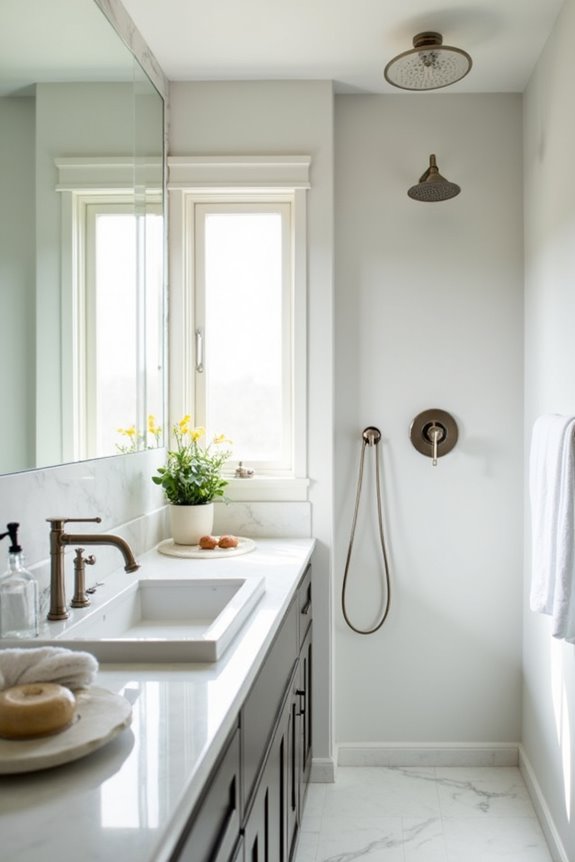
fixture upgrades. I’ve learned that vanity, toilet, and shower fixtures often consume 40–60% of your total remodel budget. These are functional pieces that define your space’s character.
Consider these budget movers:
- Vanities: Los Angeles replacements range $440–$3,800 depending on materials
- Walk-in showers: Typically $2,000–$15,000 with tile and plumbing considerations
- Plumbing relocations: Add 15–25% extra costs for moving fixtures
- Premium faucets: Luxury options significantly impact overall spending
- Shower glass: Frameless designs push projects toward luxury territory ($35,000+)
When you’re upgrading fixtures, plumbing complexity enters the picture. Moving pipes or walls amplifies labor costs dramatically. Prioritize which fixtures matter most to you—then build your budget accordingly.
Cost Breakdown by Component: Vanities, Tiles, Faucets, Lighting
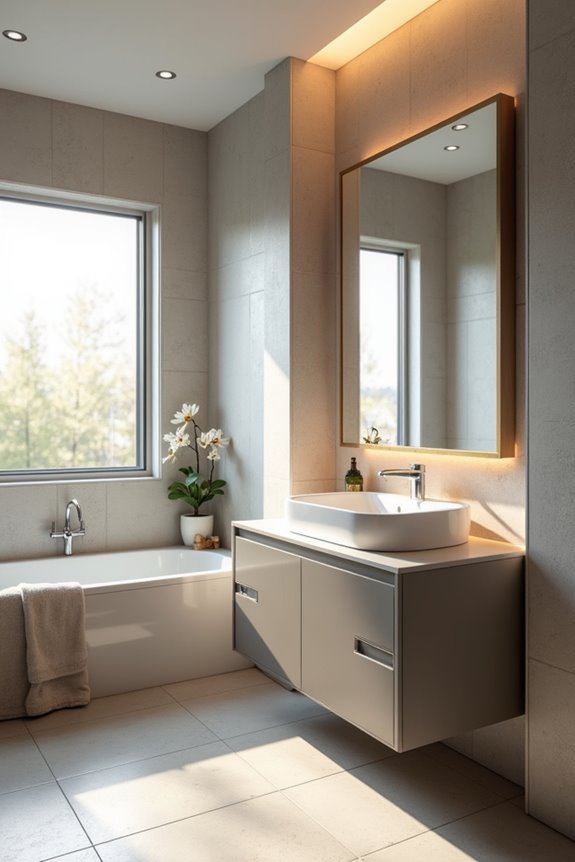
Where does your money actually go when you’re remodeling a bathroom? Let me break it down for you.
Vanities form your budget’s foundation, ranging from $440 to $3,800 depending on materials and craftsmanship. Tiles shift costs significantly—ceramic runs $1.50 per square foot while marble reaches $50. Lighting affects the overall design; layered setups cost more than basic vanity lights but create better ambiance.
Faucets occupy the middle ground, scaling from budget-friendly to luxury finishes. Here’s what matters: each component interconnects. Quality tiles demand skilled installation time. Premium lighting requires electrical work. When you’re choosing pieces, you’re building your bathroom’s character one decision at a time.
High-Impact Updates Under $500 Each
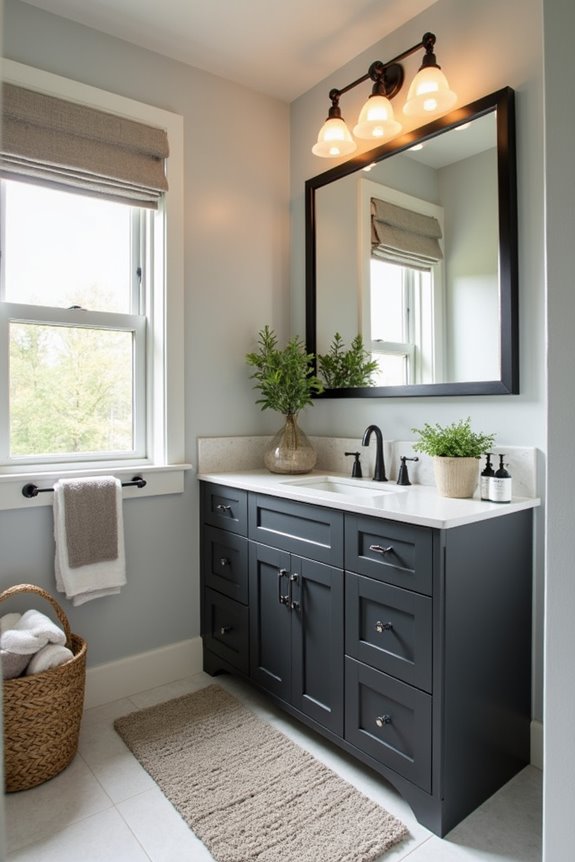
I’ve found that you don’t need to gut your bathroom to make it feel completely new—sometimes the smartest moves involve revamping what’s already there. By focusing on three key areas—paint and hardware, lighting fixtures, and accessories—I can show you exactly how to refresh your bathroom with updates under $500 each. Let’s explore each of these affordable upgrades that’ll give your bathroom a style boost.
Paint and Hardware Refresh
Sometimes the most effective bathroom updates don’t require gutting walls or replacing everything—they just need fresh paint and updated hardware. Strategic updates create real impact while staying within budget.
Here’s what you can refresh affordably:
- Bathroom paint in semi-gloss or satin finishes that resist moisture and clean easily
- New faucets that modernize your sink area
- Cabinet hardware swaps for a coordinated metal finish
- Towel bars and shower hardware matching your chosen aesthetic
- Moisture-resistant finishes and proper caulking for durability
Results come from choosing neutral colors and coordinated bathroom hardware. Invest time in surface prep—priming and sealing extend the life of your updates from months to years. Each upgrade stays under $500, making this the most practical refresh approach for improving how your space functions daily.
Lighting Fixture Upgrades
| Fixture Type | Cost Range | Benefits |
|---|---|---|
| LED Recessed Lighting | $200–$500 | Modern appearance, energy-efficient |
| Pendant Lights | $250–$500 | Stylish ambiance, room focal point |
| Vanity Sconces | $300–$500 | Task lighting, symmetrical design |
| Backlit Mirrors | $350–$500 | Functional, spa-like aesthetic |
| Dimmable LED Strips | $150–$400 | Flexible mood options, cost savings |
Accessory and Decor Swaps
What if I told you that you don’t need to tear out your entire bathroom to make it feel brand new? I’ve discovered that strategic bathroom decor swaps deliver great results at reasonable costs. You can refresh your space using budget accessories that feel well-chosen and coordinated.
Here’s what I’m investing in:
- Soft-close drawer organizers for clutter-free countertops
- Chic frameless mirrors that brighten tight spaces
- Coordinating soap dishes and storage baskets
- Premium towels in unified colors
- Decorative trays for grouped accessories
These bathroom upgrades work together, creating a polished look that feels like a complete renovation. By mixing practical organizers with stylish pieces, you’re building a space that suits your taste. The benefit? Each item costs under $500, and together they make your bathroom a pleasant place you’ll enjoy spending time in.
How to Request and Compare Bathroom Quotes
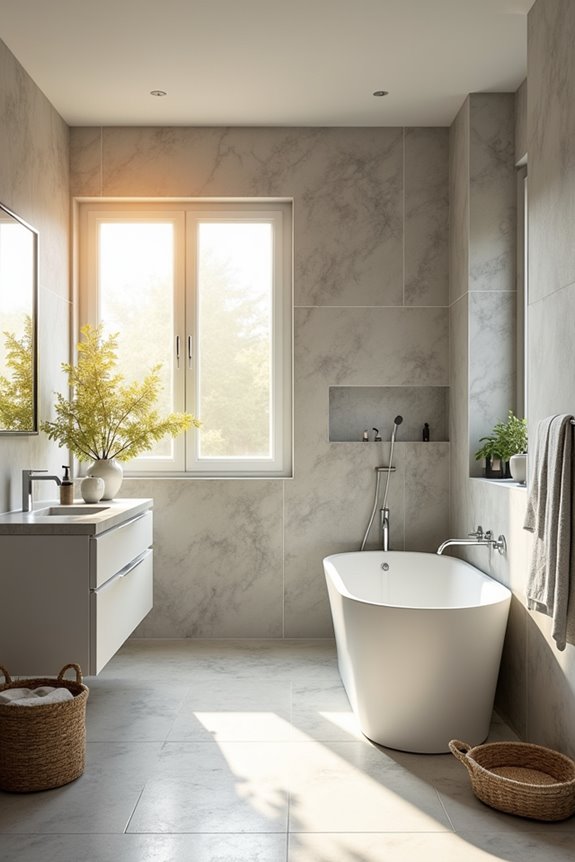
Getting accurate quotes from qualified contractors is your best defense against surprise costs and subpar work. I’ve found that requesting bathroom remodeling costs from multiple contractors gives you real pricing power.
Services like Sweeten match you with vetted local LA general contractors at no cost, guiding you through project posting to contractor shortlists and site visits. This removes the guesswork from finding trustworthy professionals.
When comparing quotes, I examine labor, materials, and permit fees separately. LA permits typically run up to 10% of your project cost, especially with plumbing or electrical work involved.
Request itemized estimates that break down vanity replacement ($440–$3,800) and tiling costs ($26–$82 per square foot). This transparency helps you understand where your money’s actually going and spot inflated pricing immediately.