

Three styles work well in living rooms when they match your actual life. Minimalist works brilliantly in smaller spaces—less clutter means more breathing room and lower costs. Modern style lets you anchor bold focal points with warm lighting, perfect if you entertain regularly. Industrial design shines in larger rooms with durable furniture that handles real living. Pick your style based on budget and space first, then layer textures and colors strategically to create genuine belonging in your home.
Match Your Lifestyle to a Living Room Style
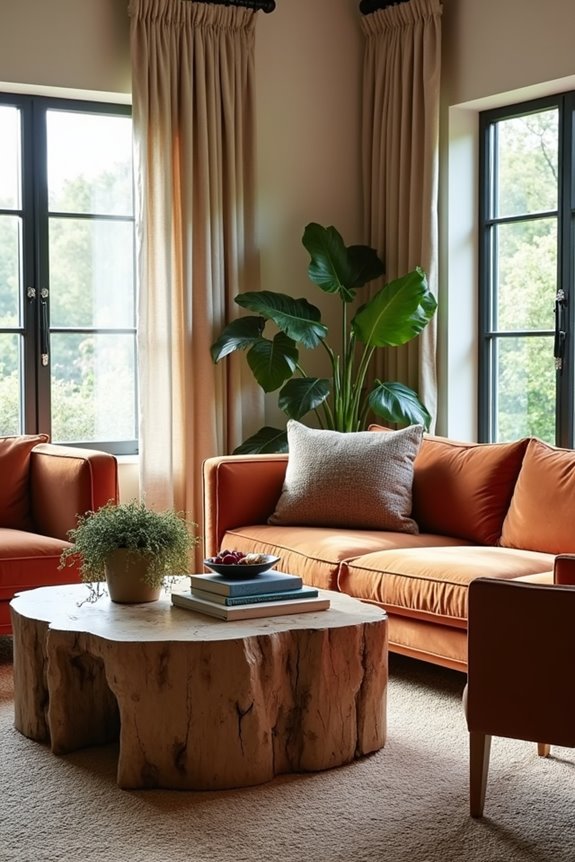
How do you actually spend your time at home? Your living room style should reflect your daily rhythms, not magazine perfection. I create spaces where life happens naturally.
Consider your lifestyle compatibility first. Do you host gatherings frequently? Choose modern living room layouts with flexible furniture arrangement and durable, wipeable surfaces. Prefer quiet evenings? Invest in cozy seating and soft wall art that soothes you.
Your color palette matters. Warm, earthy tones energize some people while cool blues calm others. Themed concepts—beach, coastal, or farmhouse—offer decor ideas aligned with how you genuinely live.
Interior design works best when it serves your habits, not the reverse. Match your space to your actual lifestyle, and you’ll love returning home daily.
Minimalist, Modern, or Industrial: Choose Based on Your Space and Budget
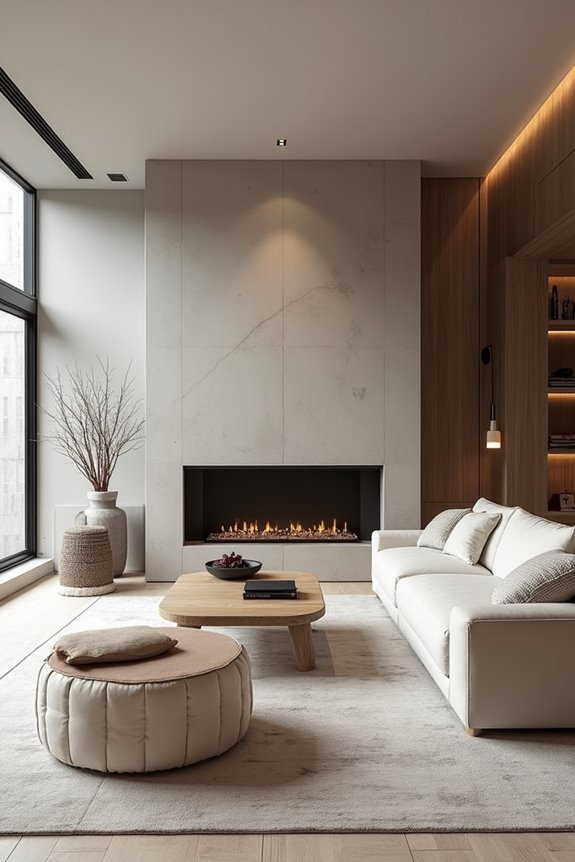
When you’re ready to redesign your living room, the style you choose should fit both your space and wallet—not the other way around. I’ve learned that minimalist spaces work well in smaller rooms because they eliminate clutter and create calm. Modern design lets you express personality through bold focal points like statement bookshelves and warm lighting. Industrial styles work best in larger spaces with concrete walls and exposed elements.
Start with your budget and space constraints. Choose a main piece—typically a sofa—then layer textures and lighting strategically. A minimalist approach costs less initially; modern requires key pieces; industrial needs quality furniture that handles rugged textures. Plan your layout first, measure doorways and windows, then select decor that matches your lifestyle. You’re not just decorating; you’re building a space where you genuinely belong.
Layer Texture, Color, and Focal Points Into Your Chosen Style
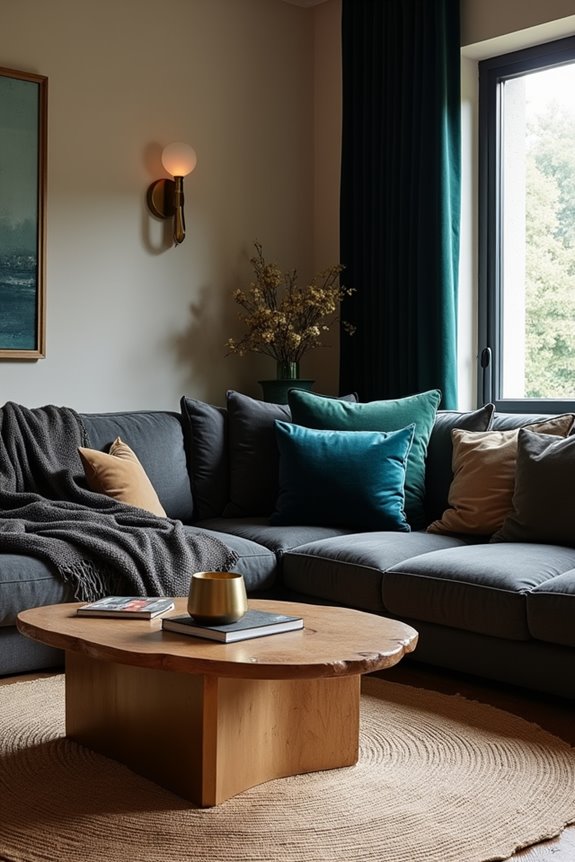
Once you’ve picked your style—minimalist, modern, or industrial—layering textures, colors, and focal points together creates depth in a space.
Your color palette should balance bold elements with calm neutrals. Anchor a focal wall with statement art or an accent rug, then let softer tones work around it. Strategic lighting emphasizes these focal points effectively.
Architectural features like beamed ceilings and built-ins strengthen your style’s narrative. Mix vintage furnishings with contemporary pieces for styling that feels deliberate. Layering textures this way builds visual interest while maintaining harmony throughout your room.