
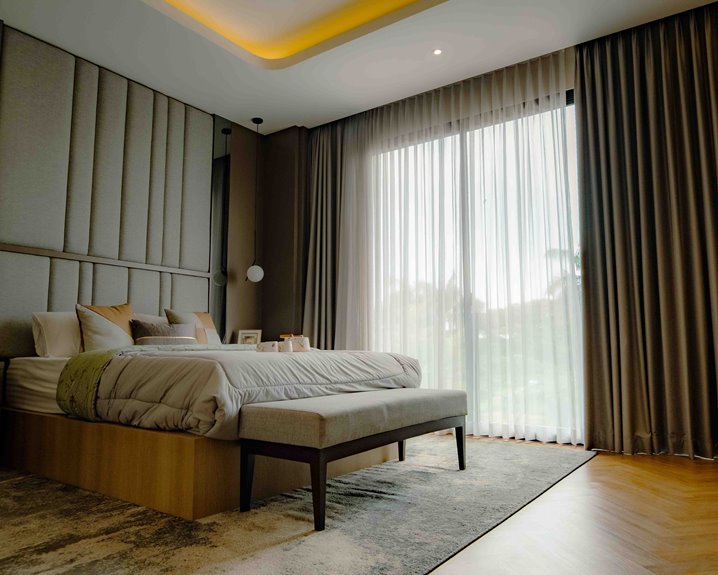
Honestly, it depends on your style and lifestyle. Floor-length curtains—touching the floor—create a polished, elegant look that makes rooms feel taller.
But you’ve got options: float-length (½ inch above) gives modern, clean vibes and reduces dust, while puddle-length pools dramatically on the floor for luxury (though it needs maintenance).
Consider your pets, kids, and fabric type when deciding. The right length changes your space’s entire appearance, so let’s explore which option works best for you.
Should Curtains Touch the Floor? The Direct Answer
How much thought have you actually given to where your curtains end? I hadn’t either until I realized this detail affects a room’s overall appearance. The answer is yes: curtains should generally touch the floor, creating that polished, tailored look we’re all after.
Here’s what I’ve learned about the main options. Puddle length means fabric spills generously onto the floor—dramatic and luxurious. Float length hovers about ½ inch above, offering a clean, modern feel that’s easier to maintain. To find your perfect measurement, measure from your curtain rod straight down to the floor. Then add 2–3 inches for puddle or subtract ½–1 inch for float. It’s that simple, and the difference is noticeable.
The Floor-Length Standard: Creating Polished Elegance
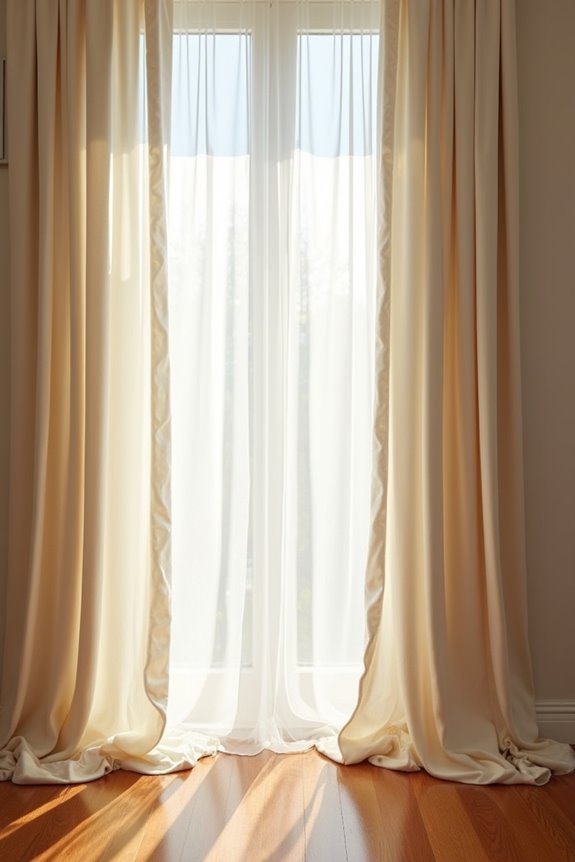
When I hung my first set of curtains, I quickly learned that floor-length panels do something almost magical—they instantly make your room feel taller and more intentional. Classic floor-length curtains, which kiss the floor or sit just ½ inch above it, create that polished, put-together aesthetic you see in designer spaces. This approach works because the unbroken line from ceiling to floor draws your eye upward, making even modest rooms feel more grand and sophisticated.
Classic Elegance Standards
Why do so many designers recommend floor-length curtains for creating that sophisticated, put-together look? I’ve found that when curtains actually touch the floor, they change a room immediately. This classic approach works because it creates visual balance and refinement that you’ll notice right away.
Here’s what makes floor-length curtains the gold standard:
- They kiss the floor with a subtle crease, avoiding messy puddle-length excess
- Properly measured drapes enhance perceived height throughout your space
- Heavy, luxurious fabrics drape beautifully at this length
- They work perfectly in formal living rooms and traditional settings
- The polished silhouette improves your entire interior design
When measured correctly, floor-length curtains reach from your rod without excessive puddling. You’ll achieve that refined look that demonstrates careful attention to detail. It’s the elegant standard that simply works.
Visual Height Enhancement
Ever notice how a room instantly feels taller when you walk into it? That’s the effect of floor-length curtains at work. When you hang curtains that kiss-the-floor length, your eye naturally travels downward along the drape, emphasizing verticality throughout your space. This visual technique increases your perceived ceiling height without any structural changes.
The key lies in curtain rod height. Positioning your rod near the ceiling—rather than just above the window frame—maximizes this effect. For standard homes, aim for 84–96 inches from rod to floor. This measurement allows your floor-length curtains to create that elongating effect you’re looking for. The result? Your room feels more spacious and sophisticated.
Modern Floating: Curtain Length 1–2 Cm Above Floor

If you’re drawn to sleek, contemporary spaces, float-length curtains hover just 1–2 centimeters above your floor and create a crisp, intentional aesthetic that pairs well with modern design. They eliminate the dust that accumulates when fabric pools on the ground and prevent snags and wrinkles from foot traffic. When you measure your windows, subtract about ½ inch from your rod-to-floor distance to achieve this floating effect, which works particularly well with mid-century modern and minimalist décor styles.
Clean Lines And Aesthetics
How much breathing room should your curtains really have? Float-length curtains—hanging 1–2 cm above the floor—create clean lines that modern spaces benefit from. This subtle gap improves your room’s appearance without requiring major changes.
Here’s why float-length works:
- Eliminates visual heaviness that floor-touching curtain length creates
- Reduces dust accumulation around fabric edges
- Prevents snagging on flooring materials
- Maintains contemporary sophistication
- Makes rooms feel more spacious and airy
When I measure my curtain length, I subtract ½ inch from the rod-to-floor measurement. This precise approach delivers that polished look without overthinking it. Modern and mid-century modern styles particularly benefit from this approach. Floating curtains let light reflect underneath, brightening your space naturally.
Maintenance And Dust Prevention
Beyond the aesthetic appeal of those clean lines we just discussed, floating curtains actually work harder for you in practical ways. When you maintain that 1–2 cm gap between your curtain’s hem and the floor, you’re actively reducing dust accumulation. I’ve noticed my floor-length curtains collect noticeably less debris than traditional ones that puddle on surfaces.
This floating length prevents snagging when you’re sweeping or when pets brush past. Your maintenance routine becomes easier—dust settles less frequently on fabric that doesn’t contact the floor. When measuring for your floating length, subtract roughly half an inch from your rod-to-floor measurement.
You’ll appreciate how this simple adjustment makes cleaning day more convenient. Less friction means less wear, extending your curtains’ lifespan while keeping your space fresher longer.
Contemporary Design Approach
When you’re ready to embrace modern interior design, the floating curtain—hovering just 1–2 cm above your floor—delivers that clean look contemporary spaces demand.
This float-length approach changes how a room feels. It’s about precision and intention. Here’s why I recommend it:
- Maintains a polished aesthetic that demonstrates thoughtful design choices
- Prevents dust accumulation while keeping floors visible
- Creates visual lightness in minimalist spaces
- Works perfectly with level floors in newer homes
- Avoids the awkward “too-short” appearance that diminishes perceived height
To achieve this contemporary design standard, measure from your rod to the floor, then subtract ½ inch. Stay under 1 inch above ground—anything higher signals miscalculation. This curtain length etiquette isn’t pretentious; it’s simply what today’s design-conscious spaces require. You’ll notice how this float-length immediately improves your room’s sophistication while keeping maintenance minimal.
Puddled Curtain Length: Luxury and Drama

Ever noticed how high-end hotels and fancy homes have curtains that actually touch the floor—and then some? That’s puddle length, and it’s a way to add luxury and drama to any room.
Puddle length means your curtains drape beyond the floor by about 5–10 cm (2–4 inches), creating that pooling effect. It’s undeniably gorgeous and signals sophistication. However, I’ll be honest: it’s impractical if you’ve got kids or pets running around. The extra fabric demands careful handling to avoid tripping hazards.
Lighter fabrics relax over time, which means your puddle might change. You’ll occasionally adjust panels to maintain that perfect fullness. Save this elegant choice for formal spaces where drama matters more than daily functionality.
Sill-Length Curtains: When Shorter Works Better
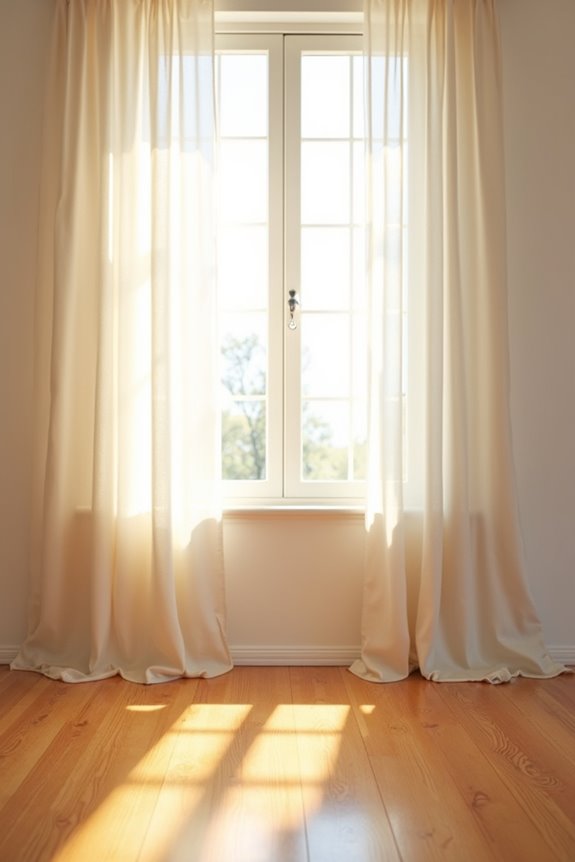
What if shorter curtains can actually look deliberate rather than unfinished? Sill-length curtains end exactly at your windowsill, creating that clean, modern aesthetic you’re after. This length works well in kitchens and casual spaces where you want both privacy and light flowing in naturally.
Sill-length curtains deliver a clean, modern aesthetic while maintaining privacy and allowing natural light to flow through kitchens and casual spaces.
What makes sill-length curtains practical:
- Maintains privacy while maximizing natural light entrance
- Creates a modern, minimalist appearance with minimal fabric
- Works perfectly with cafe curtains for layered style
- Prevents crowding your window view when rod placement is high
- Practical for rooms where floor-length fabric feels unnecessary
The key? Position your rod near the top of the window. This prevents that cramped feeling and keeps ceilings from appearing lower than they actually are.
How to Measure Your Windows Accurately
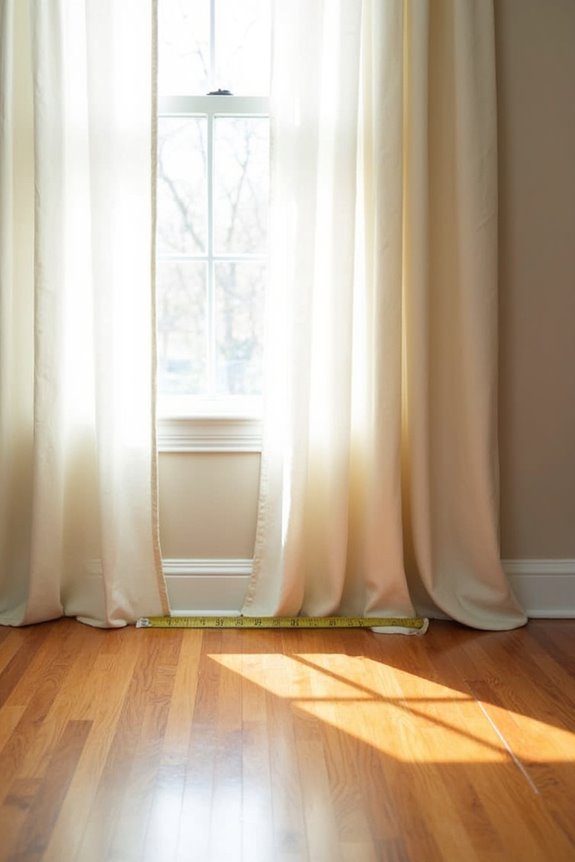
Getting your curtain length right starts with a simple measurement—but I’ve seen plenty of people skip this step and end up with panels that either puddle awkwardly or hover inches above the floor.
Here’s what I do: I measure from the rod height straight down to the floor level, accounting for any uneven spots. This baseline measurement determines your curtain length options—float, break, or puddle.
For accuracy, I measure at multiple points across the window. Floors aren’t always perfectly level, so checking several spots prevents surprises. I also consider whether my floor’s slightly sloped or uneven.
Once I have my rod height and floor measurements, I adjust accordingly. Subtracting ½ inch gives me float length; keeping my measurement as-is creates break length. Adding 5 inches produces that luxurious puddle effect.
Taking time upfront saves frustration later.
Tools and Hardware: What You’ll Actually Need
Once you’ve nailed down your measurements, the real work begins—and I’m not talking about hanging the curtains themselves. You’ll need the right tools to get your rod-to-floor distance right and achieve the floor touch you’re aiming for.
Here’s what I grab before tackling any project:
- Sturdy curtain rod (10–15 cm wider than your window on each side)
- Measuring tape for accurate rod-to-floor measurement
- Level tool to keep everything straight
- Wall anchors and brackets rated for your fabric weight
- Step ladder for safe installation
Getting quality hardware matters because it supports your curtains’ weight while maintaining proper length—whether you’re going float, break, or puddle style. I’ve learned that skimping on brackets leads to sagging rods and poor results. Invest in dependable equipment now, and you’ll enjoy well-hung curtains for years.
Choosing Rod Height to Maximize Visual Impact
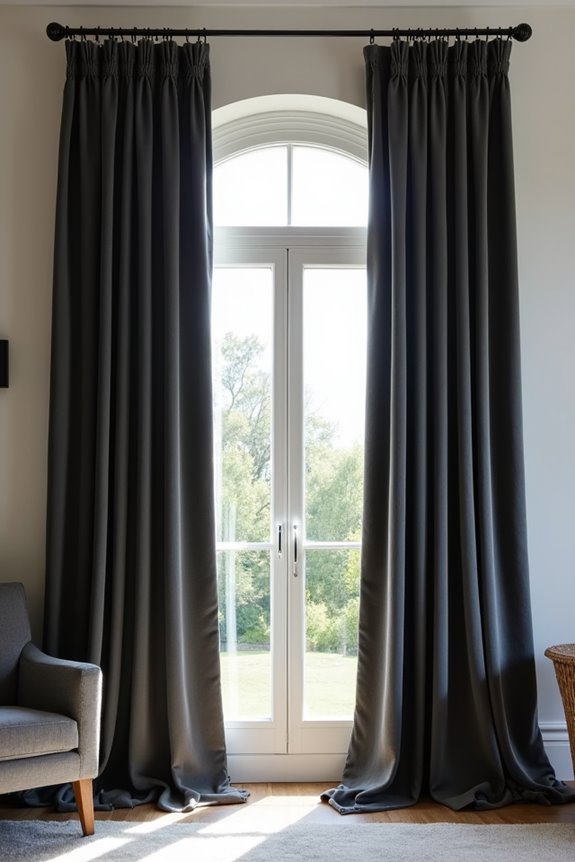
I’ve learned that where you hang your curtain rod significantly changes how your entire room feels, and it’s one of the easiest design improvements you can make. Positioning your rod roughly halfway to two-thirds up the space between your window top and ceiling tricks the eye into seeing taller windows and higher ceilings—something I didn’t fully appreciate until I adjusted my own rods and watched my cramped bedroom suddenly feel more spacious. The key here is understanding that rod height isn’t just about hanging fabric; it’s about reshaping how people perceive your room’s proportions.
Rod Placement and Ceiling Height
Where you hang your curtain rod makes a bigger difference than you’d think—it’s one of the easiest ways to affect how your entire room feels.
Curtain rod placement directly impacts ceiling height perception. Positioning your rod halfway to two-thirds up between the window frame and ceiling creates a vertical illusion that makes rooms feel airier and more spacious. This strategic placement draws your eye upward.
Consider these placement strategies:
- Mount rods 4-12 inches above window frames for maximum impact
- Use ceiling-fixed tracks in compact spaces or near bi-fold doors
- Avoid placing rods too close to window tops—it squashes proportions
- Pair elevated rods with floor-length curtains for visual impact
- Adjust height based on your ceiling’s actual dimensions
Limited wall space? Ceiling-mounted tracks offer a sleek aesthetic while maintaining vertical advantage, helping you maximize every inch.
Visual Space Expansion Techniques
How high you hang your curtain rod is one of the most powerful tools available for changing how spacious your room feels. When you mount your rod halfway to two-thirds up between the window and ceiling, you deliberately stretch the visual line upward. This choice makes your windows appear taller and your ceilings feel higher.
Pairing strategic rod height with thoughtful curtain length creates noticeable visual space expansion. Extending your rod 10–15 cm beyond each window side broadens the wall coverage, making the entire opening seem larger. Whether you choose your curtain length to puddle slightly or kiss the floor, the rod height remains your design’s foundation. Get this placement right, and your room feels more airy without significant additional expense.
Adjusting Length by Room Type
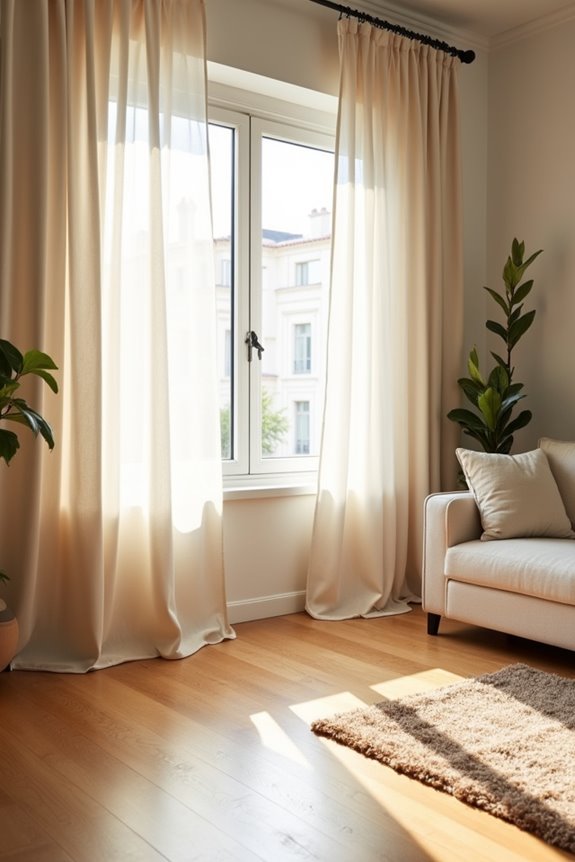
The right curtain length isn’t one-size-fits-all—it really depends on where you’re hanging them. I’ve learned that considering your room’s purpose affects how your curtains function and look. Different spaces demand different approaches, and you’ll feel more confident once you match length to activity.
Here’s how I think about it:
- Living rooms: Break length works well for versatile spaces where you need both style and practicality
- Modern bedrooms: Float length keeps things crisp and contemporary without floor-sweeping drama
- Formal dining areas: Puddle length creates that luxurious feel
- Kitchens: Float length prevents fabric from catching on appliances or getting dirty
- Home offices: Break length balances professionalism with refined aesthetics
Measure from your rod to the floor, then subtract ½ inch for float, add 1–2 inches for break, or add 3–6 inches for puddle. Your room type guides everything.
Does Your Fabric Affect Length Choices?
Your fabric choice matters just as much as your room type—maybe even more. I’ve learned that lighter fabrics like linen or sheer materials work beautifully with float or light grazing lengths, creating that airy feel. Heavier fabrics, though? They’re natural puddle candidates.
Here’s what trips people up: natural fibers shrink or stretch over time. I always measure conservatively with linen and wool, accounting for potential changes. Sheer fabrics maintain their delicate appearance best with shorter breaks, while blackout fabrics handle longer puddles without looking awkward.
Before finalizing your length choices, consider your fabric’s care requirements. Will it shrink in the wash? Does it stretch when hanging? These questions directly shape whether you’ll choose puddle, break, or float. Getting this right impacts your entire space.
Your Ideal Length: A Decision Framework
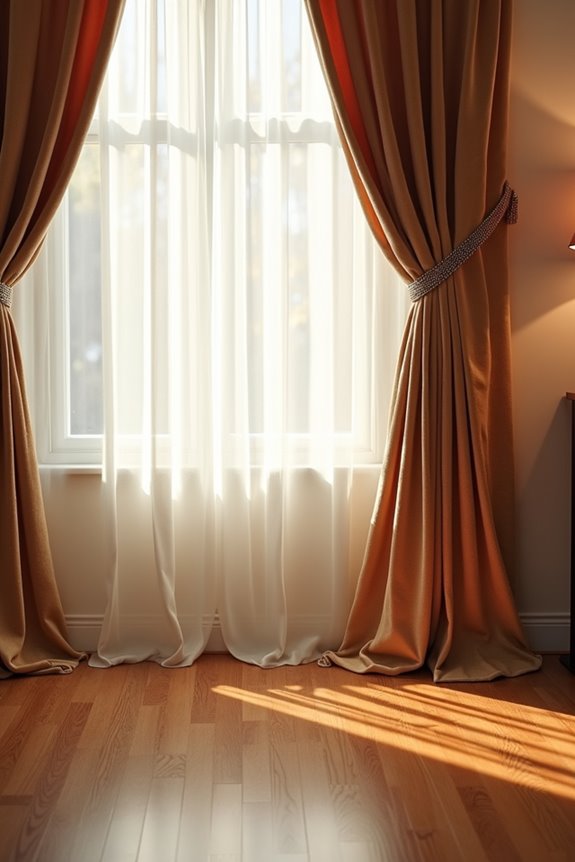
Once you’ve settled on your fabric, it’s time to pick the exact length that’ll make your space look intentional and polished.
Your rod-to-floor measurement is your foundation. From there, you’ll choose between three styles:
- Float length (minus ½ inch): Creates clean lines for modern homes
- Break length (plus 1–2 inches): Kisses the floor with versatile elegance
- Puddle length (plus 2–6 inches): Pools dramatically for formal spaces
- Room style matters: Higher curtains visually raise ceilings in standard homes
- Lifestyle considerations: Heavy traffic or pets make puddle impractical
Think about your daily life. Do you have kids and dogs? Float length keeps things organized. Prefer sophisticated elegance? Break length works anywhere. Want drama for your formal dining room? Puddle length delivers that luxury feel.
Your ideal length balances aesthetics with practicality, reflecting who you are as a homeowner.
Hanging Mistakes That Wreck Your Curtains
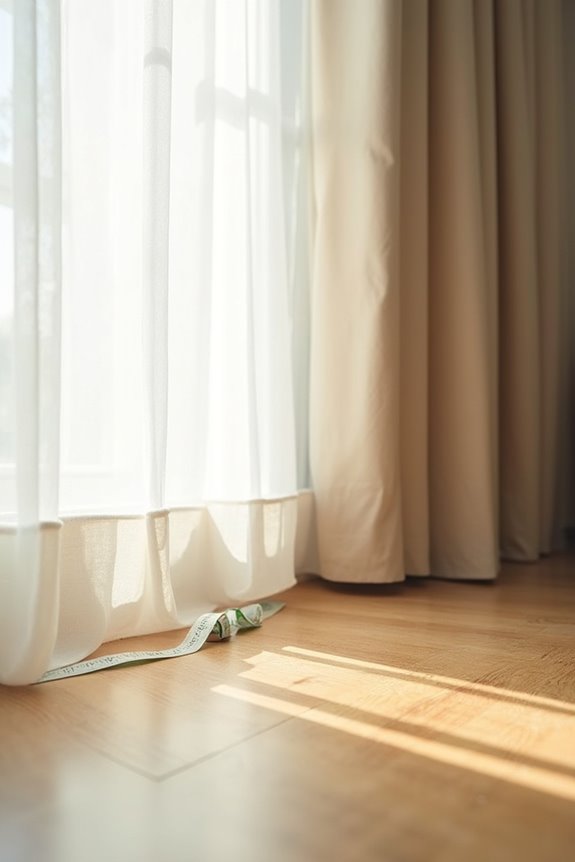
How often have you hung curtains only to step back and think something looks… off?
Common missteps sabotage your curtain length goals. Measuring from the wrong starting point throws everything off—always measure from your rod to the floor. Choosing the wrong style for your space matters too. Float length works beautifully in modern homes but looks incomplete in traditional spaces. Break length offers versatility, yet puddle-length drapes demand honest assessment: do you have pets or kids? Pooling fabric collects dust and requires maintenance.
I’ve learned that installation height dramatically impacts visual appeal. Hanging rods too low shortchanges ceiling height. Uneven hanging creates an accidental, sloppy appearance rather than intentional design.
Taking time to measure accurately and select appropriate curtain length prevents costly mistakes and produces professional-looking results you’ll appreciate for years.